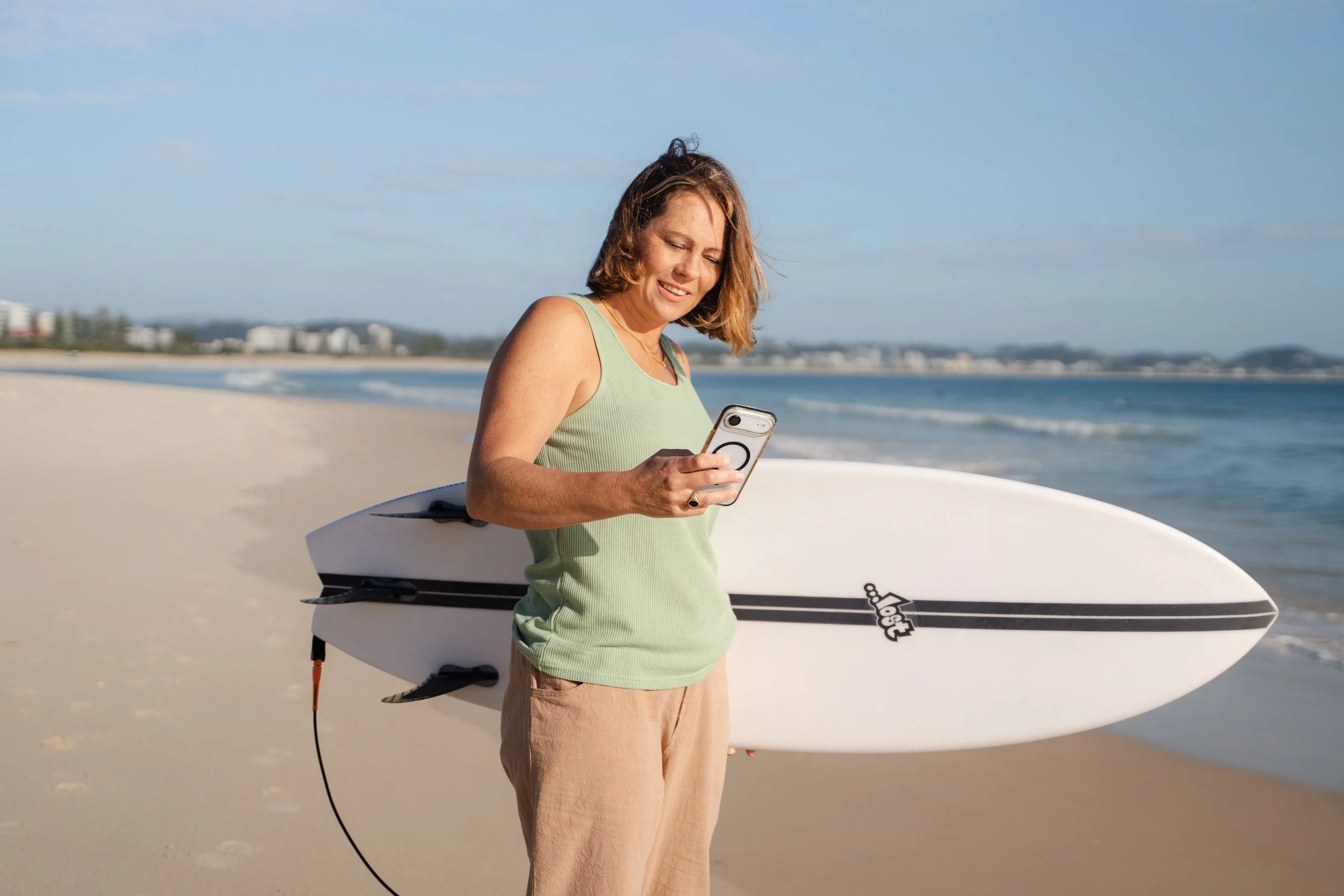
Dorsal Founder Sarah Beardmore on Sharks, Surfing and the Power of Community Alerts
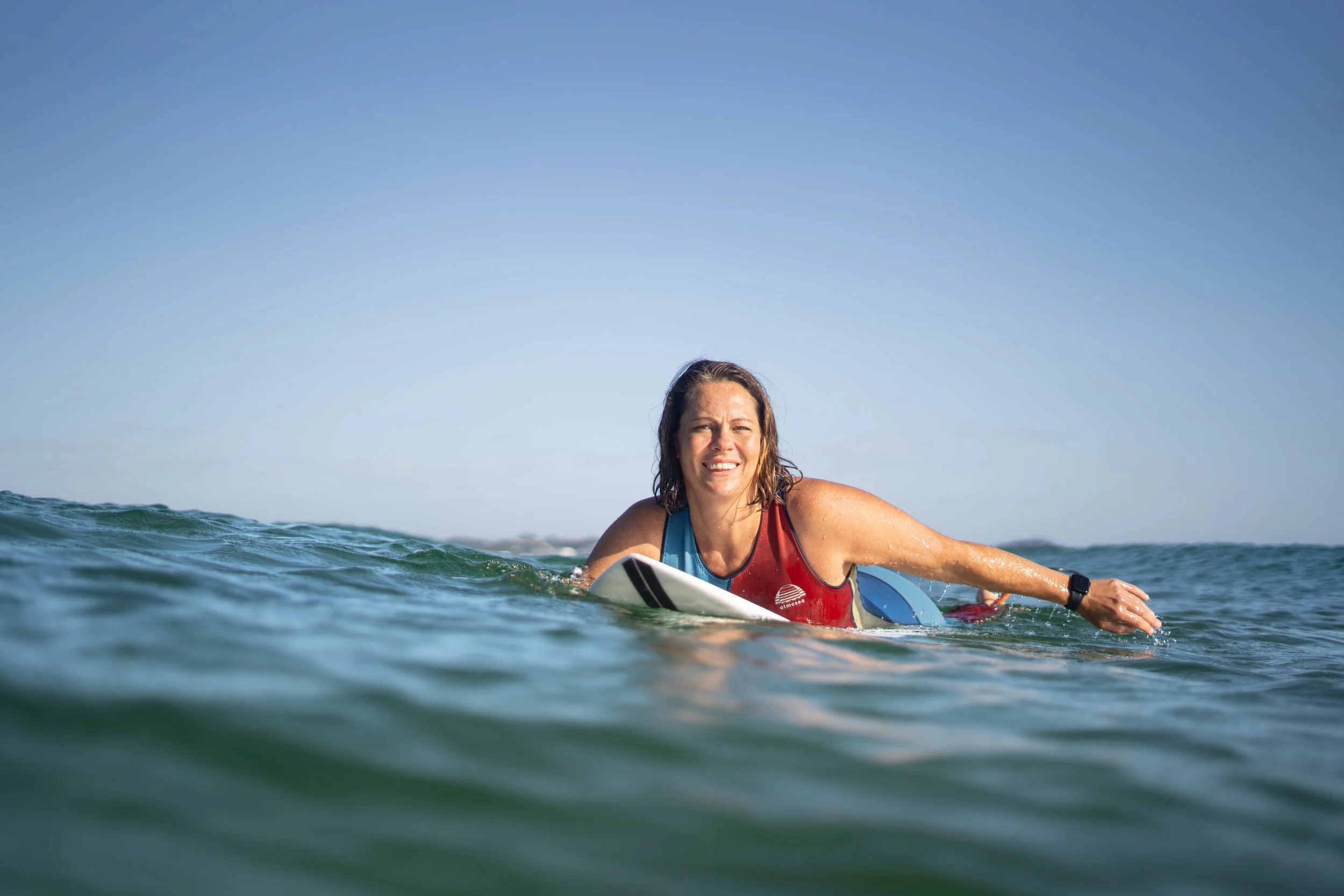
For surfers and swimmers, knowing what is happening beneath the surface can shape the decision to paddle out, change beaches or stay on shore.
Founded in 2015 by Byron Shire local and surfer Sarah Beardmore, Dorsal brings official alerts and verified community shark sightings together in one place, giving ocean users timely information to make their own informed choices. Often described as the ‘Waze of the ocean’, the platform has grown from a passion project into a nationwide community, including almost 49,000 followers across Northern NSW.
Sarah shares how a culture of surfers looking out for one another inspired Dorsal, why better information can build confidence rather than fear and how smartwatch alerts, public drone reporting and community ownership could shape its next chapter.
What first inspired you to create Dorsal, and was there a particular experience that made you recognise the need for a community-based shark alert platform?
Back in 2015, shark activity was making headlines across the country, and here in the Northern Rivers it felt especially close to home. Surfers have always looked out for each other. If you spot a shark, you feel like you owe it to the next person heading out.
What we realised was that this information already existed. People had seen sharks, the same size and species in the lead up to these incidents but there was no simple way for them to share that information beyond the people around them. A sighting might travel through a car park or between a few surfers, but it wasn’t reaching the wider community quickly enough.
I remember realising we had built something powerful when someone who was swimming contacting us from his hospital bed after a shark bite. He didn’t want media attention or any fuss, he simply wanted to warn other people in the community, and we were the first people he called. For me, that really summed up exactly what Dorsal was there to do. It was one person sharing information because they wanted the next person heading into the water to know what had happened.
As a Byron Shire local and surfer, how does your own relationship with the ocean influence the way you approach shark safety?
For me personally, as a surfer, it’s about having the information and then being able to make my own decision. I remember one day around Ballina when a surfer at North Wall had his leg rope bitten by a shark. Within about 15 minutes, another surfer was bumped at Sharpes Beach, and then there was another close call around Lennox - all within roughly an hour.
If I open Dorsal, look at the map and see that kind of activity happening along a stretch of coastline, I’m probably not going to surf in Ballina that day. It doesn’t mean
I won’t surf there tomorrow. It simply gives me information I otherwise might not have had, and I get to make that decision for myself.
After the shark incidents around Ballina in 2015 and 2016, I actually didn’t surf there for quite some time. I was pretty spooked. It felt like just when you thought, surely that’s it, there would be another incident. Dorsal was born around that same period, when there was a real need for better information to be shared within the community.
I want to be really clear, though. Dorsal isn’t about creating fear around sharks. It’s about giving people timely, trusted information so they can make their own informed call about getting in the water. For me personally, having that information actually gives me more confidence, because I can assess what’s happening and make a decision that feels right for me.
The ocean is my playground, and I’m incredibly lucky to live in one of the most beautiful coastal communities in the world. I love the ocean and everything that lives in it, including sharks. For me, it’s about coexistence, the more we know and understand, the better equipped we are to share the ocean responsibly.
You’ve spoken about changing where you surf when multiple shark sightings are reported nearby. How do you personally assess the risk before entering the water?
As there is relatively high shark activity and surveillance in the Northern Rivers, Dorsal has naturally become part of my surf routine. I check the wind, swell and conditions, and then I’ll open Dorsal. Sometimes I’ll turn notifications on if I’m particularly curious about what’s happening, but generally I prefer looking at the map because it gives me a really good picture of recent activity along the coast (when I choose to know).
I’m basically looking at whether there’s been one isolated sighting or multiple reports at the same beach or across nearby beaches within a short period. I tend to pay a little less attention to the tagged-shark receiver reports because we see those more regularly. They come from the yellow SharkSmart listening-station buoys you might have noticed off some NSW beaches, which detect tagged sharks when they come within about 500 metres.
If there’s been an actual sighting from the public or SLSNSW, an incident, a whale carcass nearby, or repeated sightings in an area, that carries more weight for me and is usually enough to change my plans.”
Living in Byron, that doesn’t necessarily mean I won’t surf. I might just drive a little further south or north and find somewhere else. I also pay attention to what’s happening in the water, things like large bait balls or anything else that might attract sharks.
Years ago, so much of this information was shared between surfers in the car park or on the beach. That local knowledge is still incredibly valuable, but if you’re surfing somewhere new or there aren’t many people around, you don’t necessarily have access to it. Dorsal gives you another way to get that information, and I can check it before I even leave home.
I know plenty of surfers who say they’d rather not know, and that’s completely fine - they don’t have to look. Personally, I want the information. I want to know that I’m doing what I reasonably can to avoid a risk that might otherwise have been mitigated.
What gaps in existing shark monitoring and beach patrol programs is Dorsal designed to address, particularly at beaches without guaranteed year-round coverage?
Government shark monitoring and drone programs are incredibly valuable, but the reality is surveillance can’t be everywhere, all of the time. We have a huge coastline, hundreds of beaches and people entering the water outside patrol hours or at beaches that may not have regular monitoring.
As surfers, we’re usually chasing the best waves and, if we’re lucky, the least crowded ones. That often means surfing early in the morning or seeking out more remote locations, and we don’t tell everyone where the good waves are when we find them
That’s where community reporting can complement official surveillance. Dorsal was really built around the idea of being a bit like Waze for the ocean. One person sees something and shares it, and suddenly that information can help everyone else using that stretch of coastline. Surveillance can’t be everywhere, but people are and that’s really the power of the community. Every surfer, swimmer, fisher, drone operator or person walking along the beach can potentially contribute information that helps someone else make a more informed decision.
How does Dorsal verify community-submitted reports and ensure the information shared with users is timely, accurate and responsible?
Trust in the information is incredibly important to us. Community reports go through a layered verification process using things like GPS data and image recognition, and we also have a human check from our team before reports are published. There can occasionally be a short delay while something is being verified, but we’d rather take that extra moment than put information out that we’re not confident in.
We also have verified reporters and partners. These are people we know and trust, such as experienced drone operators, fishers and others who are regularly on the water, whose reports can be pushed through in real time.
One of the benefits of Dorsal is that it’s one app across Australia, so whether you’re surfing in NSW, Queensland, Western Australia or travelling interstate, you can use the same app and the same platform to see what’s being reported.
The aim is really to bring all of that information together in one place; official reports where they’re available, alongside verified community sightings and then get it to people as quickly and accurately as possible.
What have you learned from building the Northern NSW Dorsal community, which now has close to 49,000 followers? Are there any local reports or experiences that have stayed with you?
What I’ve learned over the years is that there’s a really strong community of people here who understand that sharks are part of the ocean. We all make different decisions around them, and that’s completely personal.
There have been a couple of times this year where countless sharks have been cruising and feeding on fish around Tallow Beach and across the bay. Personally, I wasn’t going to take the risk of surfing there while that activity was happening, but other surfers were comfortable staying in the water. Neither decision is something Dorsal is there to make for you and our role is to give people the information and let them make that call for themselves.
That, to me, is what the Dorsal community is really about, not telling people whether they should or shouldn’t enter the ocean, but sharing what we know so everyone can make their own informed decision. Shark reports on social media get shared organically. People are fascinated by sharks so the audience and community grows itself.
Can you tell us about the upcoming smartwatch alerts and plans to open drone reporting to the public? How will these developments change the way people access and contribute shark-sighting information?
We’re really excited about this next stage because ultimately it’s about getting information to people faster, and getting it to them where they actually need it.
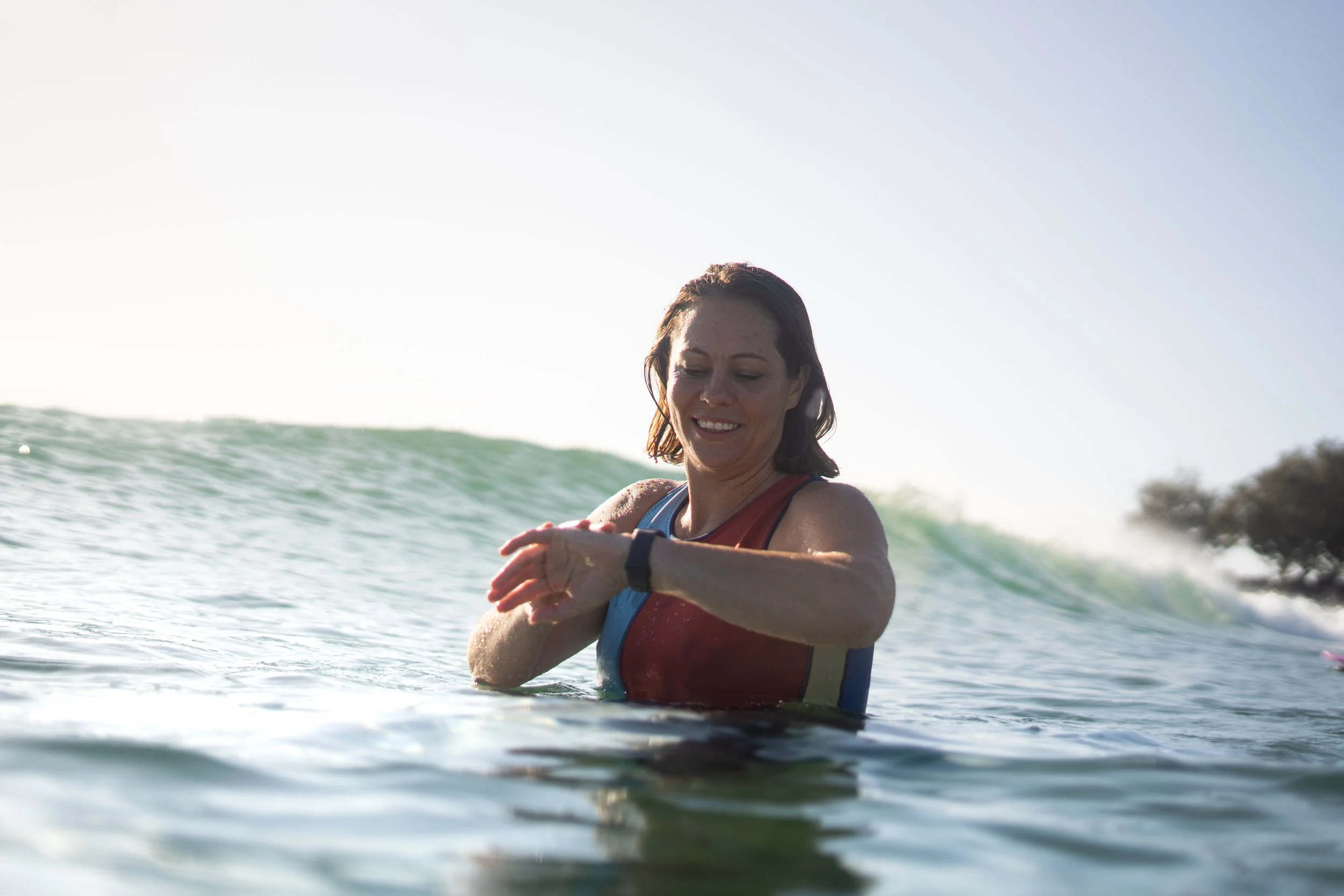
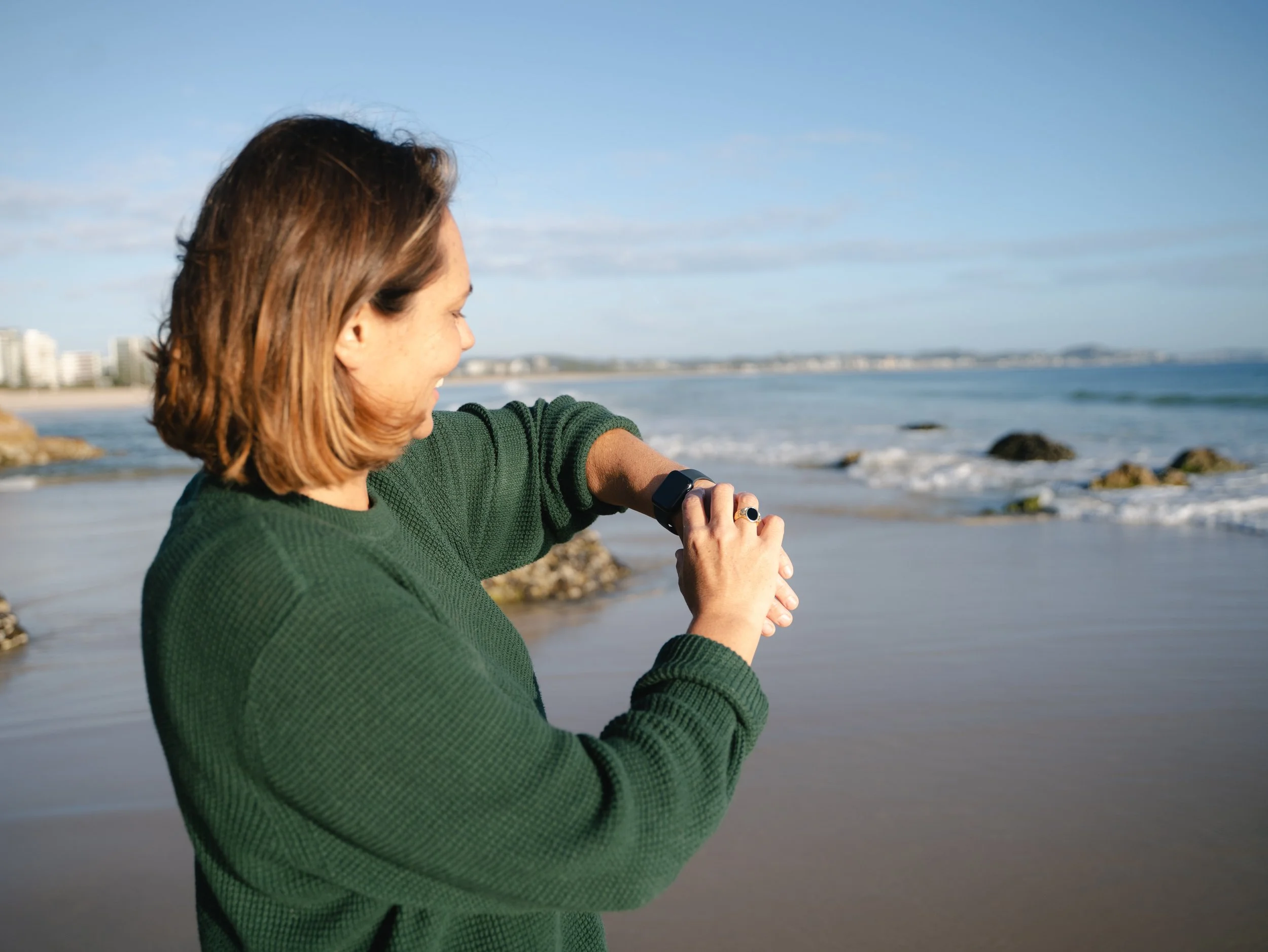
At the moment, if I’m surfing, my phone is probably sitting on the beach or locked in my car. So even if a shark is reported nearby and Dorsal sends me an alert, I may not see it until I’ve finished surfing. What we’re working towards is taking that information all the way from a drone operator spotting a shark, directly into Dorsal and ultimately to someone’s smartwatch while they’re still in the water. People will be able to filter which kind of notifications matter to them most.
The think about the reporting and alerting technology we’ve built i that harks are where we started, but the underlying technology isn’t limited to sharks, it can potentially be applied to other hazards and different verticals where getting trusted information from the person who sees something to the person who needs to know, quickly, really matters.
It takes us right back to why we started Dorsal: the information is often already out there. We’re just trying to make it easier and faster to share it.
What do you hope Dorsal will become in the future, and what role can coastal communities play in creating a safer and more informed relationship with the ocean?
There’s a natural extension for the technology into other hazards and use cases, as well as opportunities through strategic partnerships and expanding our presence in other countries. But whatever direction we grow in, I’d love Dorsal to stay true to why we built it in the first place. Dorsal will continue to bring together what people are seeing in the water so others can make a more informed call.
Sometimes Dorsal is referred to as like the Waze of the ocean. In the same way Waze brings together what everyday drivers are seeing to help people make better decisions on the road. Coastal communities will play such a big part of that. We already look out for each other in the water so Dorsal is really just the technology that allows us to share that information further and get it to people as close to real time as possible.
With Dorsal actually starting as a passion project. Dorsal was built for the community, it’s grown because of the community, and now through our equity crowdfunding raise, we’re giving that same community the opportunity to actually own a little piece of Dorsal and be part of what we build next. If anyone is interested in taking a look you can check out https://www.birchal.com/company/dorsal.