
Psychotherapist Nikki Foord on Why Byron Is The Neverland Of Australia

By Kate Love
Byron Bay has long been a place people come to start again. Drawn by the ocean, laid-back lifestyle and promise of reinvention, people arrive searching for freedom, connection and sometimes a version of themselves they feel they’ve lost.
For Byron-based accredited psychotherapist Nikki Foord, that search has inspired an affectionate nickname for the town: “Neverland”.
Since moving to the region in 2008, Nikki has noticed a recurring pattern among some newly single men who arrive in Byron following the end of a long-term relationship. It’s a phenomenon she describes through the analogy of Peter Pan – not as a refusal to grow up, but as an attempt to reconnect with the last version of themselves they remember feeling free, alive and happy.
With single fathers accounting for a higher proportion of single-parent households in Byron Shire than across NSW at the last Census, the conversation also raises broader questions about relationships, loneliness, fatherhood and the changing expectations placed on Australian men.
We spoke with Nikki about why Byron can offer such a powerful promise of reinvention, what she calls the “Identity Lag Effect” and how men can build a life they no longer feel the need to escape from.
You’ve described Byron as a kind of “Neverland” that attracts the Peter Pans of the world. What do you mean by this, and what patterns have you observed in your work?
“Neverland” is my nickname for the town, not a diagnosis of the people in it.
The Peter Pan analogy isn’t about men refusing to grow up or being bad fathers. It describes what can happen when a man becomes disconnected from who he is internally and reaches backwards for the last version of himself he remembers feeling free, alive or happy.
When a long relationship ends, the loudest thing can become your own internal voice. Most people struggle to sit in that, so they go looking for the last time they felt genuinely happy.
For a lot of men, that was in their teens or twenties. Before the mortgage, the marriage, the title and before anyone needed anything from them.
Byron can feel as though you’ve teleported back there. Sun, ocean, movement and an endless stream of new arrivals. Nobody necessarily knew you before, so there’s freedom to rediscover who you are.
I see this particularly in newly single men over 35 as they reconnect with an identity he last knew at 20. New board, new circle, saying yes to everything and carrying more energy than he has had in years, while gradually losing touch with the people who know him most deeply.
I don’t see that as immaturity, it's the only map he has of himself being happy, so he tries to run it again.
I call it the Identity Lag Effect. Our circumstances change quickly, but our sense of who we are can lag years behind. The new identity, constant activity or impulsive decisions we see externally may be attempts to manage the loneliness and disconnection underneath. Naming that without shaming it can help a man recognise that he isn’t alone.
Why do you think Byron and the surrounding region particularly appeal to men who feel overwhelmed by their responsibilities or disconnected from their identity?
This region is promoted through freedom, lifestyle, health and wellbeing. When you’re overwhelmed or lost within yourself, that doesn’t read as a holiday. It reads as a safe haven.
Byron represents the possibility of reconnecting with dreams you decided couldn’t exist inside your previous life. The ocean, movement, good food and sun on your skin go straight to the part of someone who has been running on empty.
Then there’s the culture of retreats, ceremonies and self-development. It gives reinvention a framework that feels meaningful. He isn’t necessarily running away; he may be genuinely trying to understand himself and find a healthier way forward. So, the appeal isn’t just the beach, it’s vitality, possibility and permission to begin again.
The catch is that you can build an active social life without creating a foundation of support. I’ve worked with men who had forty people they could surf with and no one they felt able to call when they were struggling. That’s the difference between company and connection.
Single fathers represented 22.8% of single-parent households in Byron Shire at the last Census, compared with 19% across NSW. What do you believe may be contributing to this difference?
This region has a reputation as a place you come to start again, so it naturally attracts people already looking for a reset. Some arrive separated, but many families move here together searching for the same thing. The tree change can be an attempt to repair a relationship, the hope that a new environment will ease the pressure the family has been under. However a new setting can’t resolve difficulties that haven’t been addressed internally or within the relationship.
Byron also gives people room to start again without judgement. You can be forty-eight and living in a share house, fifty and beginning again, or still working out what comes next, and nobody blinks. That acceptance is one of the best things about this place. However acceptance and accountability aren’t the same thing. Without honest relationships and appropriate support, a temporary coping strategy can gradually become a way of life.
That doesn’t mean these fathers aren’t committed to their children. Many have reorganised their lives around remaining close to their children while carrying their own grief, loneliness and uncertainty silently.
I’ve worked with men who had 40 people they could surf with and no one they felt able to call when they were struggling. That’s the difference between company and connection.
How can we discuss “Peter Pan Syndrome” without unfairly stereotyping single fathers, many of whom are deeply committed parents navigating difficult circumstances?
This has nothing to do with whether a man is a committed parent. A single father can be loving, devoted and completely present while privately struggling with his own identity.
What I’m talking about is internal. You can be an exceptional father and still reach backwards for an old identity to help you cope with a situation you didn’t plan for. The two can live side by side.
Peter Pan Syndrome isn’t a clinical condition, and I don’t use it as one. It’s shorthand for a coping pattern I see in newly single men, many of whom aren’t fathers too.
Reaching back for the last time you felt happy isn’t a parenting failure. It can happen when the structure that once told you who you were disappears.
Single fathers may also struggle to find support that speaks to their experience. We need to make it safer for men to admit they feel lonely, overwhelmed or unsure of who they are without having their love for their children questioned.
What pressures or conflicting expectations are Australian men facing today, and how can these contribute to a loss of identity within relationships or parenthood?
Australian men have been emotionally suppressed for generations, but it can be difficult to see because they’ve always appeared surrounded by people. Sport, the surf, the pub and the worksite, it looks like one of the most connected male cultures in the world. However, men often socialise side by side rather than face to face. You can be surrounded by people and still feel completely alone inside.
Humour holds much of it in place. The serious thing gets said once as a joke, everyone laughs, and nobody has to do anything with it. Company isn’t the same as connection.
Then there’s the brief men were given: be capable, provide, hold it together and don’t need anything from anyone. Their worth was located outside them, in what they produced and what they could carry. Now we’re asking them to be present, communicate, become hands-on fathers and be honest about how they’re going. That’s a good ask, but we added it without removing the old expectations or teaching men how to meet the new ones.
A man is expected to be deeply available and completely self-sufficient at the same time. Many are being asked to do something nobody in their family line has modelled for them. That’s why so many go online looking for a script.
The loss of identity happens when a man becomes a function. He earns, fixes, drives, sorts things out and keeps everyone steady. Over time, the function can replace the person.
When the relationship ends or the children grow up, it can remove his answer to the question, “Who am I?” He may then look for another external source of worth because that’s the only place he has ever found it.
This isn’t about blaming men, it’s recognising that many were never given the tools to build a relationship with themselves.
What does taking responsibility and becoming more emotionally honest look like in practical terms for a man who recognises these patterns in himself?
Start by separating two things that often get confused. Guilt is a feeling and responsibility is an action.
A man can feel terrible about himself for years and change nothing, and privately that can feel like accountability. It isn’t. Responsibility isn’t deciding you’re a bad person, it’s recognising the effect of your behaviour and choosing what to do differently.
Emotional honesty is smaller and harder than people imagine. It’s saying one true sentence to one person, out loud, without putting a joke on the end. Most men can tell you exactly how they’re going, but they deliver it as a one-liner so nobody has to respond. Drop the one-liner, let the truth sit in the room and you’ve started doing the work.
It’s having the conversation you’ve been avoiding with the person it’s actually about and having it this week. Not just journalling about it or processing it at a workshop. Saying it before it becomes a crisis.
It’s also keeping one relationship that predates the collapse. An old mate, a sibling or someone who knows the whole story. Start fresh, but don’t start blank. That single thread can stop reinvention from becoming amnesia.
A retreat or book can give you recognition, and recognition feels enormous, but awareness isn’t change. It’s the feeling of change. What you do next is what makes it real.
What tangible steps can men take to strengthen their relationships with themselves, their children and their partners, and create a life they no longer feel the need to run away from?
With yourself, start with insight, but don’t stop there. You can’t act on what you can’t see, but action is what makes the insight real.
I use the VPB Audit: Values, Priorities and Boundaries, in that order, because the order is the point. Values are what genuinely matter to you now, not what mattered at twenty-five. Priorities are where your time, energy and money actually go. Open your calendar and bank statement for the past month. What you say matters is a story. Where your resources go is the evidence. Boundaries protect the first two. A boundary without values underneath it is a wall. A boundary built on a value is structure. Not, “Don’t ask me about that,” but, “I’m not available Wednesday nights because that’s dinner with my son.” The gap between your values and priorities is often where the emptiness lives. It can show that you’re still running the priorities of the man you used to be.
Then write down who you would call at two in the morning. If the list is short, that’s the work. Not another course. One real relationship, rebuilt.
With your children, remember that big experiences are wonderful, but they also need ordinary, consistent availability. Swap one big weekend for one ordinary Wednesday. Let them see that you’re a person rather than someone who is permanently fine. They inherit what we model.
With a partner or former partner, go first once. Ask one question you would normally avoid, then stay for the answer without defending yourself.
The point isn’t to shame men for how they’ve coped. Most have been doing the best they can with the tools and examples they were given. Feeling lonely, disconnected or restless doesn’t mean there’s something fundamentally wrong with you. It may mean you’ve lost contact with yourself and that can be rebuilt.
You don’t have to wait for a crisis or do it alone. The next step may simply be telling someone the truth and allowing yourself to get support.
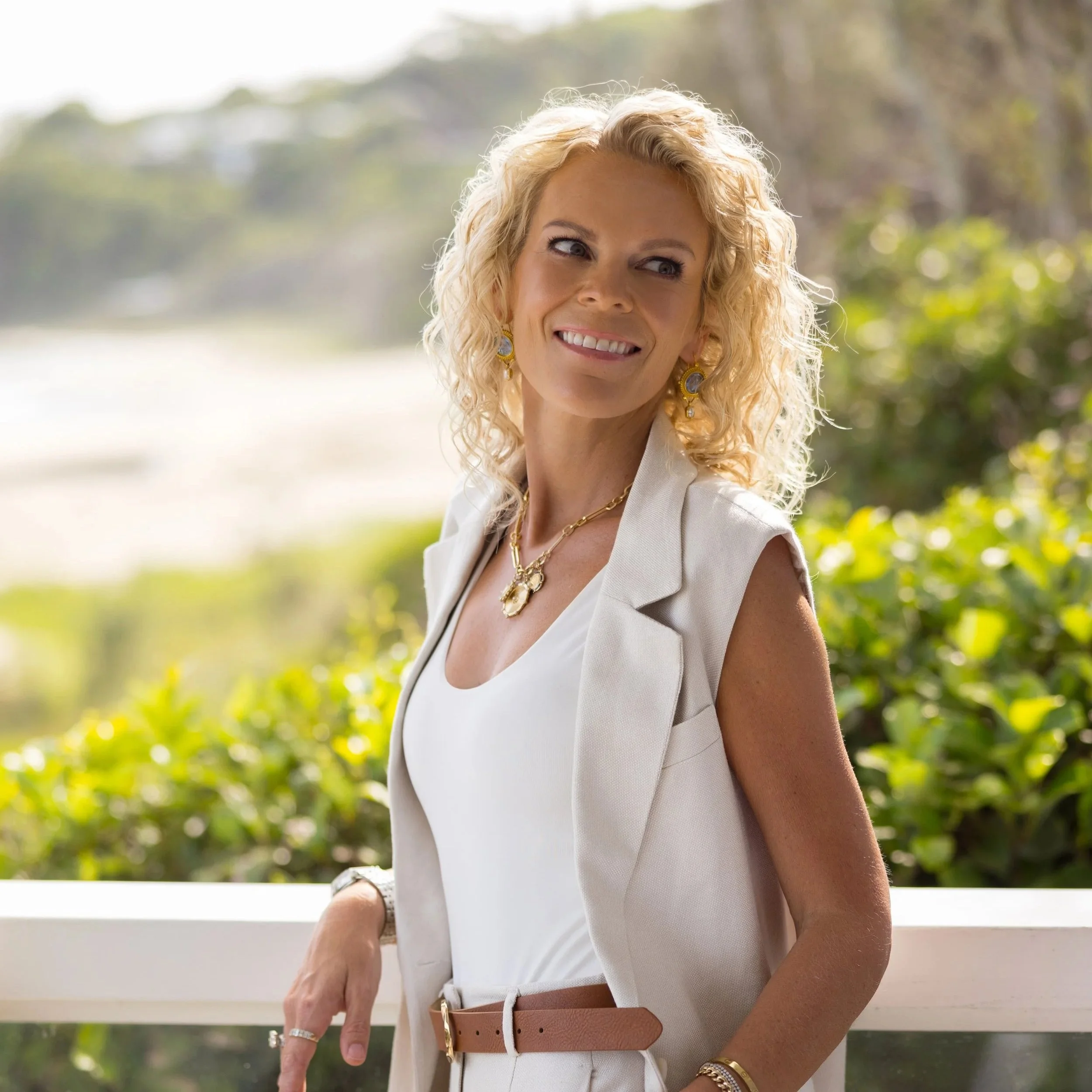
Nikki Foord is a relationship and behavioural specialist who works with business owners, executives and individuals to strengthen the relationship they have with themselves and the people around them. With more than 20 years of experience working at the intersection of human behaviour, psychology, and performance, her work focuses on the patterns beneath success that shape how people connect, communicate, lead, and navigate pressure.