
The Rise of Restorative Travel
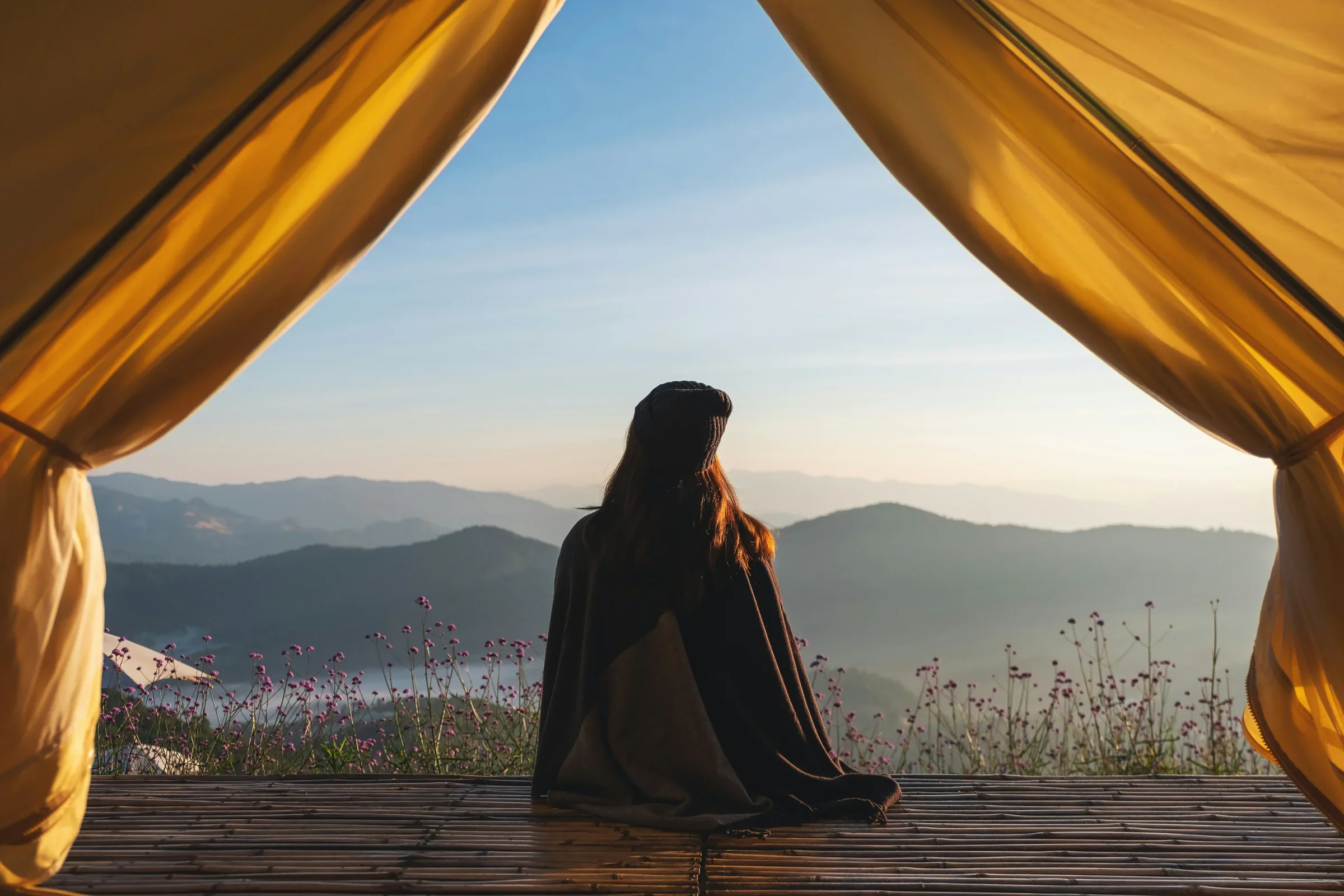
For a growing number of people, travel is less about fitting in a crammed schedule of sights and activities, and more about an opportunity to pause, recharge and return home feeling healthier, calmer and more connected than when they left.
This shift is known as restorative travel, a way of exploring the world that prioritises wellbeing over busy itineraries. While wellness tourism was once closely associated with luxury spa resorts and expensive retreats, today's restorative escapes are far more diverse: they can be found on coastal walking trails, in secluded forest cabins, beside wild swimming spots or in small villages where life moves gently.
Rather than promising transformation through indulgence, these journeys offer the chance to slow down and reconnect with ourselves and the world around us.
Redefining what wellness travel means
The idea of travelling for wellbeing isn’t anything new. For centuries, people have sought out natural hot springs and mountain air to improve both their physical and mental health, and the notion of escaping the city by going to the seaside to convalesce was a major part of Victorian medicine.
While wellness travel of recent decades may have centred around fancy facilities and indulgent spa treatments, today's travellers are using their holidays to get back to nature. This means they’re looking for destinations that offer peaceful walking trails, natural water swimming, nourishing local food or quiet spaces free from constant distractions.
This evolution reflects a growing understanding that wellbeing isn't created through a single experience but through the overall rhythm of a journey. Time spent watching a sunrise, listening to birdsong or making memories with friends can be just as restorative as a massage or meditation session.
The result is a more accessible and personal approach to wellness travel. Restorative experiences don't have to come with a hefty price tag or require a strict itinerary – sometimes the greatest luxury is having nowhere else to be.
Nature as a place of recovery
One of the defining characteristics of restorative travel is its close relationship with the natural world.
Whether it's hiking through forests, kayaking along a river or spending a few days by the sea, nature encourages us to slow down. Away from crowded streets and endless pings and notifications, it's often easier to notice the changing daylight, the rhythm of the tides, or the sound of the wind moving through the trees.
Research continues to demonstrate the positive relationship between time spent in natural environments and improved mental wellbeing, which explains why destinations centred on outdoor experiences continue to grow in popularity. Walking holidays, national parks, coastal trails and wilderness escapes all offer opportunities to reconnect with landscapes that remind us to move at a different pace.
Unlike conventional sightseeing, where success is often measured by the number of attractions visited, restorative travel invites us to spend longer in fewer places, allowing meaningful experiences to emerge naturally.
The appeal of digital detoxes
Emails, social media and DMs mean many of us stay connected to our daily life wherever we are, and as a result, travellers are increasingly seeking holidays that offer a break from this constant stream of information.
Some choose accommodation with limited mobile reception, such as camping out in nature, while others deliberately design their days so they spend more time reading or walking, and not looking at their phones.
A digital detox doesn't necessarily mean completely abandoning technology. Instead, it creates space for more intentional use, allowing travel to be about presence rather than productivity. Without the pressure to document every experience or respond immediately to every ping, many people discover a renewed appreciation for small moments that might otherwise go unnoticed.
More travellers are swapping packed itineraries for slower, more meaningful escapes, discovering that the greatest luxury isn't doing more, but taking the time to truly rest, reconnect and return home feeling restored.
Finding restoration in simple experiences
One of the most appealing aspects of restorative travel is that it doesn't need expensive or elaborate activities; it can just be a morning swim in calm water, an afternoon spent exploring local markets or woodlands, and an evening watching the sunset.
These slower experiences encourage travellers to engage more with their surroundings, rather than rushing from one landmark to another, as well as connect with local communities, discover regional traditions and appreciate the character of a place.
This philosophy aligns closely with the principles of slow travel, which value the quality of an experience over the quantity of destinations. By spending more time in one area, travellers develop a stronger sense of place and reduce the pressures of fast-paced itineraries.
A changing generation of travellers
Recent research from Skyscanner suggests that younger generations are increasingly seeking holidays centred on wellness, outdoor experiences and meaningful connections rather than traditional sightseeing alone. Activities like hiking, visiting gardens and spending time in nature are becoming more influential when choosing where to travel.
The same research highlights an increasing interest in authentic experiences and cultural exploration, suggesting that travellers are placing more value on journeys that leave a lasting impression rather than filling a photo album.
While these preferences are particularly evident among younger travellers, the appeal of restorative travel extends across all age groups. After years of busy schedules and constant connectivity, many people are reassessing what they hope to gain from time away.
Travelling with intention
Restorative travel is less about where we go than how we choose to experience a place. Choosing fewer activities, allowing time for rest, embracing local culture and remaining open to spontaneity all contribute to a more meaningful experience.
This approach also encourages more sustainable travel habits. Spending longer in one destination reduces unnecessary transport and supports local businesses, helping to ensure that travel benefits the places we visit as well as ourselves.
In a world that often celebrates speed, productivity and endless movement, restorative travel offers a different perspective – it invites us to slow down, breathe deeply and rediscover the value of stillness. Rather than escaping everyday life, we return better equipped to engage with it.