
The Conscious Home: Byron Builders and Designers Leading Sustainable Living
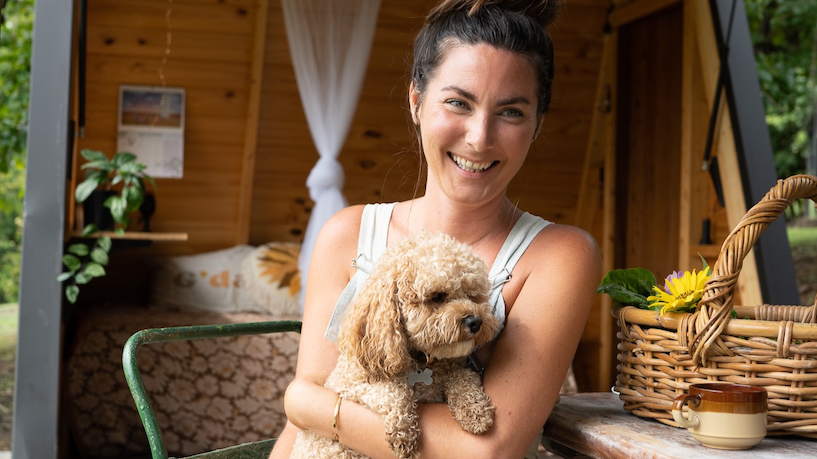
Founder of Seed & Sprout Sophie Kovic
By Kate Love
In Byron, the way we build says as much about us as the way we live.
I grew up in the Byron hinterland on a macadamia and rainforest farm. The house wasn’t “designed” in the architectural sense, but it worked with the land. Windows were opened with the weather, not against it. Shade came from trees, not blinds. Water mattered. Power wasn’t infinite. Nature wasn’t aesthetic - it was daily life.
Across the Byron Shire, a quiet design revolution is unfolding - one that favours passive cooling over air-conditioning, reclaimed timber over fast finishes and rainwater tanks over excess. From tiny homes tucked into hinterland clearings to architect-designed off-grid retreats, the conscious home is no longer niche. It’s becoming the new standard.
Building With the Climate, Not Against It
Byron’s best sustainable builders understand something simple: good design begins with listening. Listening to the land, to the light, to prevailing breezes and to the rhythms of the seasons.
Passive design - orienting homes to capture winter sun and deflect summer heat - is at the heart of many new builds. Deep eaves, cross-ventilation, high ceilings and thermal mass reduce reliance on artificial heating and cooling. The result? Homes that feel naturally comfortable, energy efficient and quietly intelligent.
Solar arrays and battery storage are now commonplace, but the real shift is in mindset. It’s less about technology as a badge of honour and more about reducing consumption altogether.
Sophie Kovic, founder of Seed & Sprout, shares:
“I’m always trying to find harmony between what my desires tell me and what my actions are doing. I think that localising many of the commodities we use in our day-to-day life, pooling resources, lowering the cost of living and lowering the impact on the environment around us is critically important.”
Tiny Homes, Big Intentions
The tiny home movement continues to gain traction in the Northern Rivers, not just as a housing solution but as a lifestyle choice.
For some, it’s about affordability. For others, it’s about freedom - the ability to live lightly, reduce debt and prioritise experiences over square metres. Smart joinery, multipurpose spaces and thoughtful storage make small-scale living feel expansive rather than restrictive.
In a region navigating housing pressure and environmental sensitivity, tiny homes also offer a lower-impact way to inhabit land.
Sophie explains:
“My decision to build an off-grid tiny home in the Byron hinterland really felt like a natural next step for me. I’d always dreamed of a life that was closer to nature, so when the opportunity came up to join a community permaculture farm, I jumped at it.”
Designing and building my own tiny home has allowed me to work towards a life that aligns perfectly with my values – a simpler, more intentional lifestyle – one where I can live lightly on the earth, grow my own food, and be part of a supportive community.
Regenerative Landscaping
The conscious home doesn’t stop at the front door.
Local landscape designers are rethinking gardens as ecosystems - incorporating native species, edible plantings and water-sensitive design. Swales, greywater systems and rain gardens slow and filter runoff, while food forests and permaculture principles turn backyards into productive, resilient spaces.
Growing up, the land fed us in quiet ways - macadamias in season, fruit from trees, creek water running clear after rain. That relationship with place stays with you. And it’s that same thinking I see shaping Byron’s regenerative gardens today.
The shift is subtle but powerful: gardens are no longer decorative afterthoughts. They’re part of the living system.
Off-Grid and In Sync
Off-grid living in Byron has evolved beyond the romantic notion of “disconnecting”. Today’s off-grid homes combine sophisticated energy systems with practical design. Solar, composting systems, bore water, battery storage - all integrated seamlessly into homes that feel refined, not rustic.
And yet the intention remains grounded. Living off-grid here isn’t about isolation. It’s about responsibility.
Sophie adds:
”Designing and building my own tiny home has allowed me to work towards a life that aligns perfectly with my values – a simpler, more intentional lifestyle – one where I can live lightly on the earth, grow my own food, and be part of a supportive community. It’s taught me how empowering sustainable living can be.”
A New Definition of Luxury
Perhaps the most striking shift in Byron’s design culture is how we define luxury.
It’s not imported stone or oversized kitchens. It’s filtered rainwater. It’s waking to cross-breezes instead of compressor hum. It’s knowing your home works with the environment, not against it.
The conscious home is thoughtful, responsive and deeply connected to place.
In Byron, sustainability isn’t a trend. It’s a return to common sense, to craftsmanship and to living well within our means.
And as more builders, architects and homeowners choose this path, the future of housing here feels not only possible, but beautifully intentional.