
Why More Swedes Want Their Funeral to Feel Like a Party

Photo: The Swedish Exit
What If Your Funeral Was a Celebration Instead of a Goodbye?
Grief and funerals in Sweden have traditionally been associated with flowers, silence and coffee afterwards. But something is changing in this famously reserved corner of the world.
Rather than following the familiar template of a sombre ceremony and quiet gathering afterwards, a growing number of Swedes are imagining something altogether more colourful for their final farewell.
Think Swedish Midsummer. Long tables outside. Summer flowers. Favourite songs. Friends and family gathered together. Laughter. Stories. And perhaps a glass of schnapps raised to the person at the centre of it all.
Swedish funeral agency Fonus has given this idea a name: The Swedish Exit.
Created as a visual interpretation of how Swedes would like their funerals to look, The Swedish Exit uses AI-generated imagery informed by survey data to explore a cultural shift in the way people think about death, grief and remembrance.
For Conny Sohlberg, funeral director at Fonus, the idea emerged from something he was already witnessing through his work with families.
“People do not necessarily want a farewell that follows a set template. They want it to feel true to the person who has died – their personality, their relationships and the life they lived.”
And it seems plenty of Swedes agree.
More than a third – 35 percent – said they could imagine a more festive farewell celebrating the life that was lived. Among people aged 18 to 29, that figure rises to more than 41 percent.
“For a country often described as quiet and reserved, that says something important,” says Sohlberg. “Many people do not only want sadness to define their final farewell. They also want there to be room for warmth, music, laughter and gratitude.”
Grief Without a Template
Perhaps the shift isn't simply about changing funerals. It may also reflect a broader change in how we understand grief itself.
There can be an unspoken expectation around what grief is supposed to look like: sadness, tears, solemnity and silence. But anyone who has experienced loss knows grief rarely behaves so neatly.
“I often meet people who wonder whether they are grieving correctly,” says Sohlberg. “They may ask themselves whether they are crying too much or too little, or whether it is wrong to laugh at a happy memory during such a difficult time.”
His answer is beautifully simple: “But grief has no template.”
“It can contain sorrow, relief, love, laughter and longing, sometimes all within the same moment.”
Once we allow grief to be individual, he believes the way we say goodbye can become individual too.
“A ceremony can be warm, colourful and full of music while still being deeply respectful. In many cases, bringing in the things that the person truly loved is the sincerest way of honouring them.”
A Very Swedish Kind of Celebration
There is something wonderfully contradictory about The Swedish Exit.
Sweden is often associated with restraint, understatement and privacy. Death, too, has traditionally remained relatively private and solemn.
Yet The Swedish Exit imagines something different.
“The Swedish Exit borrows some of that openness, but gives it a distinctly Swedish setting: the summer light, the long table outdoors, the flowers, the songs and the people you love gathered around you,” says Sohlberg.
And then there is Midsummer.
One of Sweden's most beloved celebrations, Midsummer marks the arrival of summer with flowers, food, music, dancing and gatherings that stretch into the long Scandinavian evening.
When respondents were asked what kind of celebration they would like their farewell to resemble, Midsummer ranked highly, particularly among younger people.
“Midsummer is one of the rare moments when this otherwise reserved country lets go completely, making the most of the light, the music and the company,” says Sohlberg. “The fact that people reach for that image when imagining their own farewell says something about the warmth beneath the reserve.”
Celebrate Me While I'm Still Here
One of the most thought-provoking findings had nothing to do with funerals at all.
Seventeen percent of respondents said they would like to celebrate their life with the people they love while they are still alive.
It is an idea that feels both wonderfully obvious and strangely radical. Why wait until someone is gone to gather everyone they love in one place and tell them exactly what they have meant to us?
For Sohlberg, there is something particularly significant about Swedes expressing that desire.
“There is something quietly un-Swedish about that. We have a cultural code, the Jante Law (Jantelagen), that teaches us to keep our heads down and never make a fuss of ourselves. And here we have people saying they would like to be celebrated, out loud, while they can still enjoy it. I think that is rather moving. We want to gather while there is still time.”
Forget the sombre farewell. A growing number of Swedes are imagining their final goodbye with music, flowers, laughter and even a little schnapps.
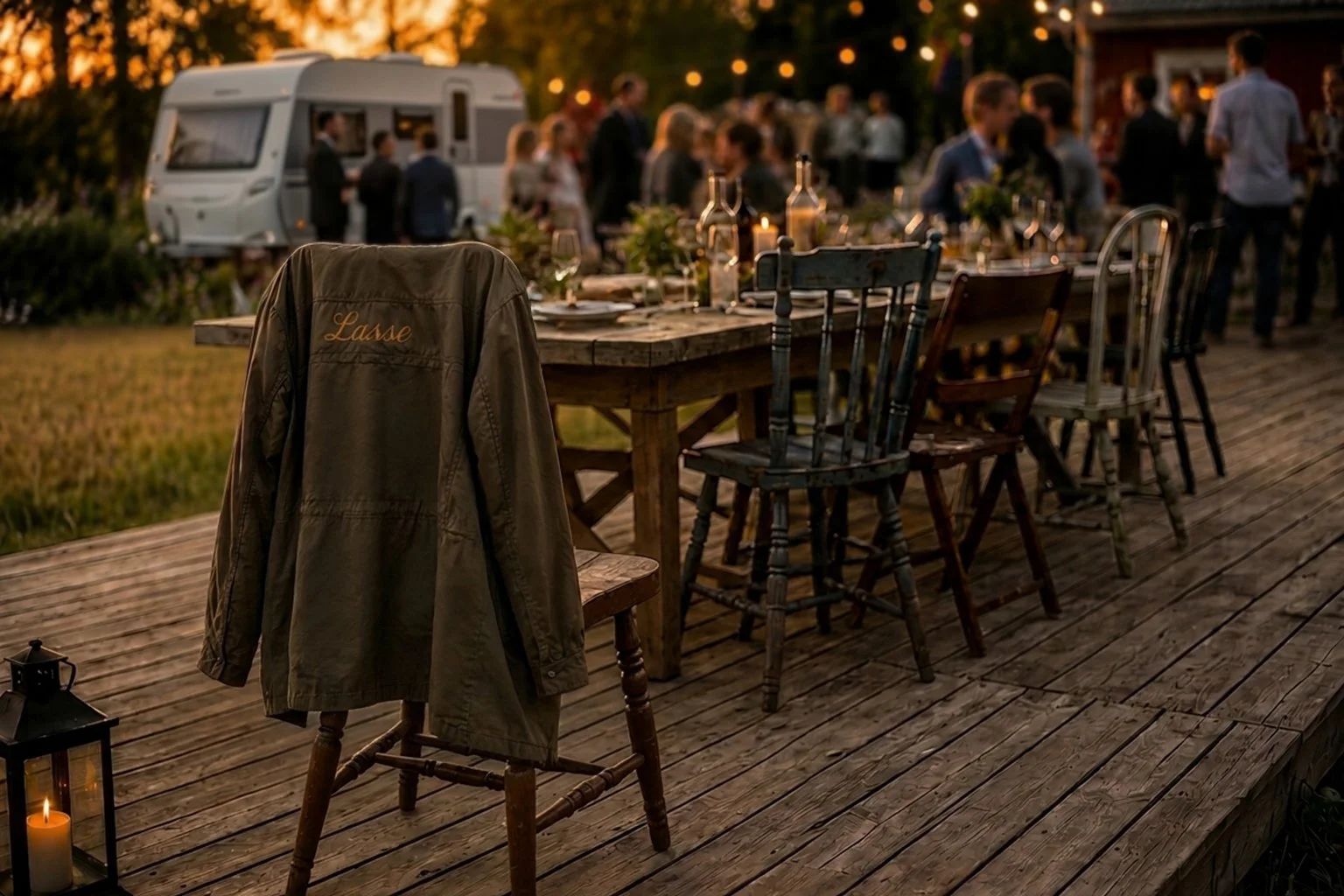
Photo: The Swedish Exit
Younger Swedes Are Changing the Conversation
The generational divide revealed by the research is striking.
While 41 percent of people aged 18 to 29 could imagine a festive farewell, that falls to 23 percent among those aged between 65 and 84.
Younger people are also more likely to request favourite songs and imagine ceremonies outdoors or gatherings around a fire.
But that doesn't mean older Swedes aren't thinking about their final farewell.
“Older generations care every bit as much,” says Sohlberg. “They have often thought about it more deeply, and they tend to write their wishes down quietly, keeping them more private. What is changing is how openly people are willing to say it out loud. The openness is spreading, and I am glad to see it.”
Starting the Conversation
Death remains one of those subjects many of us carefully avoid until circumstances force us to confront it.
But perhaps talking about how we want to be remembered doesn't need to begin with funeral arrangements, coffins or paperwork.
Sohlberg suggests starting somewhere much simpler: with memories.
“Start with the memories and let the practicalities come later. It is much easier to talk about what mattered in a life, for example a favourite song, place, a story you always tell, than to jump straight to the arrangements.”
And importantly, these conversations don't always have to be serious.
“Some of the warmest conversations I have taken part in have included a great deal of humour and laughter. Talking about death does not have to mean taking the joy out of the room.”
Writing down your wishes can also relieve some of the burden placed on family members when the time eventually comes to make decisions.
“The purpose is not to plan every detail, but to make things a little easier for those who may one day have to make decisions on your behalf,” says Sohlberg.
One Last Gathering
Technology will undoubtedly continue changing the way we remember people. Funerals of the future may increasingly incorporate digital memories and allow loved ones across the world to participate from afar.
But for all that might change, Sohlberg believes something deeply human will remain.
“I do not think the need to gather will disappear. If anything, it will become even more important. In a time when so much happens at a distance, being together in the same place, sharing memories, sitting side by side and simply being present with one another will continue to be at the heart of a farewell.”
And perhaps that is what makes The Swedish Exit interesting beyond Sweden.
Underneath the Midsummer flowers, long tables, music and schnapps is a simple question most of us rarely stop to consider:
If your final farewell could truly reflect the way you lived, what would you want it to look like?
Maybe it would be quiet and traditional. Maybe there would be music. Maybe everyone would gather outside around a fire. Maybe there would be stories that make people cry with laughter.
Or perhaps the better question is whether we should wait until we're gone to have the party at all.
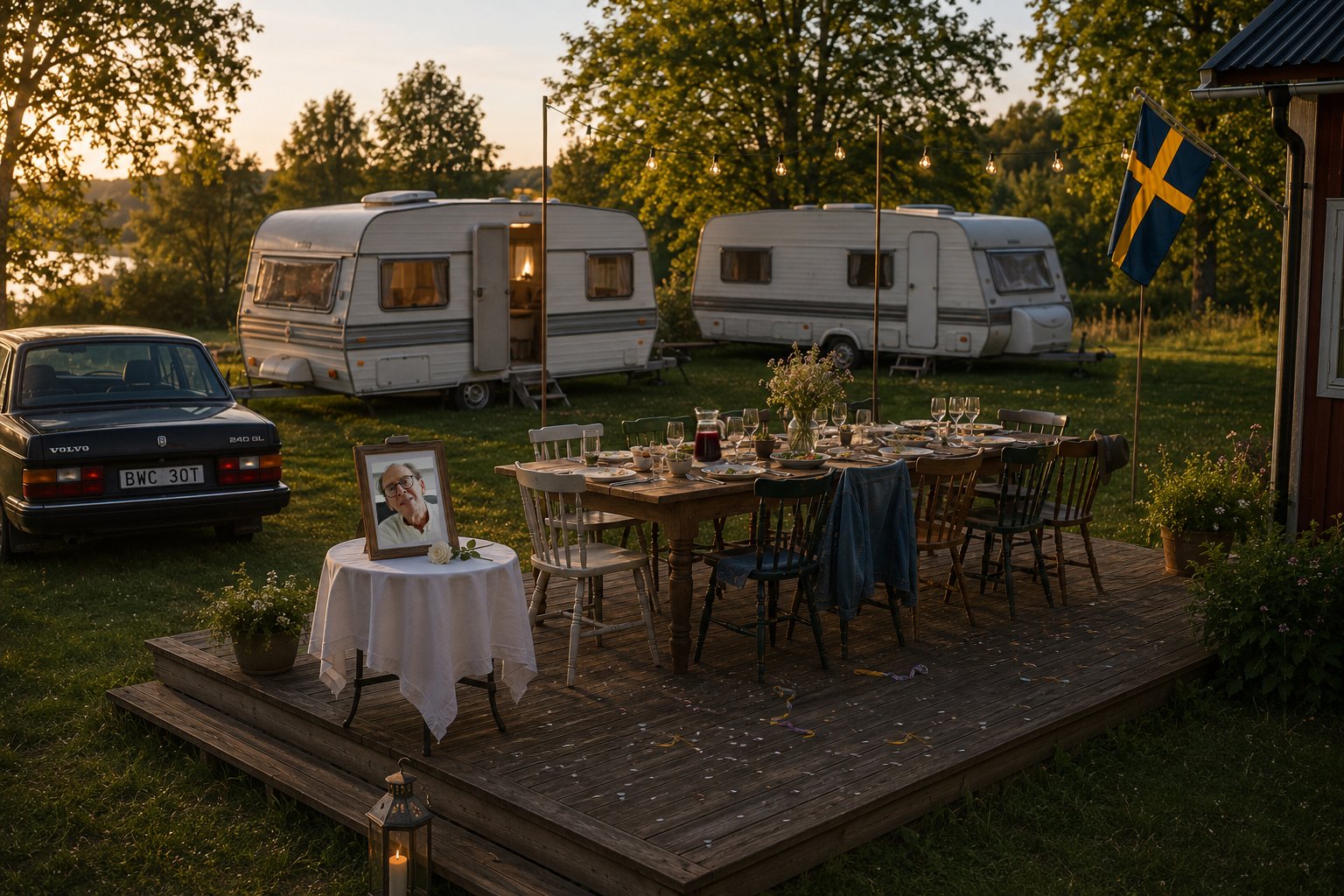
Photo: The Swedish Exit
About the surveys
During spring 2026, Fonus commissioned two surveys conducted by Verian through the Sifo Panel, a nationally representative online panel recruited using random sampling methods.
The survey on how Swedes would like their final farewell to be was conducted between 9 and 20 February 2026 and included 3,312 respondents. The remaining questions were asked between 2 and 6 June 2026 and answered by 1,000 respondents.